
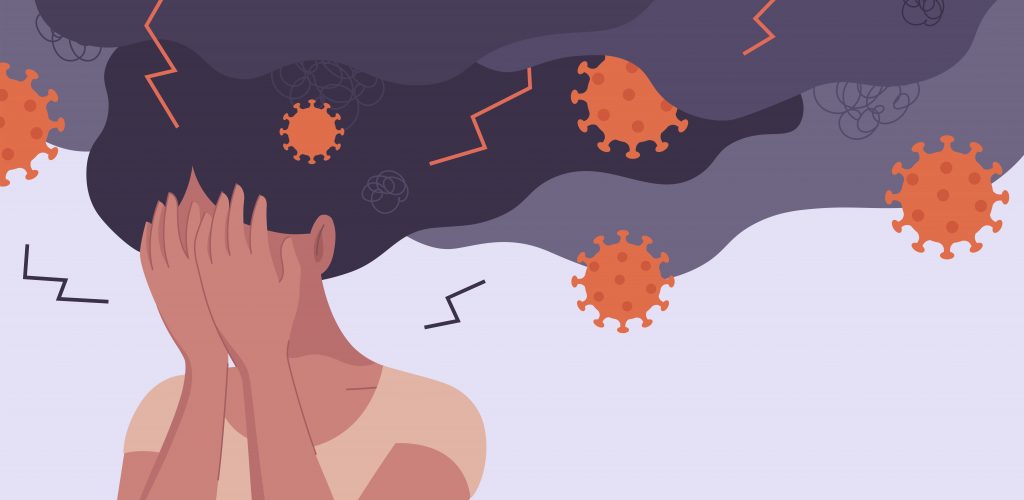
Mental health has taken a hit during the pandemic.
Many more adults are reporting feelings of anxiety, depression, and stress. Mental health plays a crucial role in how we see ourselves, others, and the world around us. Here are a few simple ways to take care of your mental health the same way you exercise and go to the doctor to take care of your physical health.
Set healthy boundaries
Setting boundaries can look like putting your phone on Do Not Disturb when you’re spending time with family or making the decision to not check your work email after hours. According to this PsychCentral article, healthy boundaries “establish what behavior you will accept from other people, and … what behavior other people can expect from you.”
Having boundaries violated can leave a person with low self-esteem and resentful of whatever is pushing that boundary, whether it be work or a friend. Start slow, perhaps by saying “no” to a favor you honestly don’t have the bandwidth to complete. Healthy boundaries are key to maintaining mental health and the health of relationships. While it can feel hard to set them at first, remember, healthy boundaries are actually very kind.
Mediate
It’s not news that meditation is good for you. The practice is great for dealing with stress, anxiety, and for increasing self-awareness. For most people, the problem isn’t accepting that meditation is good, it’s figuring out how to start.
There are many meditation apps out there to suit any need. Some of the most popular like Calm, Headspace, and Simple Habit have either a free version or a free trial. After that free trial is over, though, some apps cost around $70 a year. If you aren’t looking to pay that much, you can find free guided meditations on YouTube. You may also have access to guided meditations through other services you already pay for, such as Spotify, Tidal, or Audible. Like most things in this vein, it’s important to do some hunting around to find the meditation style that you most enjoy. If a teacher’s voice drives you crazy, move on to the next. It’s worth it to find something you like enough to stick with.
If you’d rather practice meditation in a group, check out Meetup.com to find a group doing just about anything, meditation included.
Limit Screen Time
Whether you’re doom scrolling the news or comparing your life to what you see on social media, there’s no question that reducing screen time often results in a happier you. The internet affords us so much connectivity, but sometimes there’s too much of a good thing.
Apple products have a Screen Time feature which tells you how much you used your phone or tablet and allows you to customize your screen time daily limits. If your device doesn’t include this feature, you can always get meta by creating alerts on your phone or computer to remind you to disengage every once in a while. Here are some other tips to reduce screen time. Some people have found joy in practicing Screen-Free Saturdays.
Therapy
Some issues don’t go away on their own, no matter how hard we may try to get our minds around them, meditate them away, talk to friends, or engage in self-care. There’s nothing like sitting down with a completely impartial third party to get to the bottom of your issues. The old stigma around therapy has largely given way to a societal embrace. Almost every person has something tough they’re dealing with, even if you’d never expect it. From cognitive-behavioral therapy to supportive therapy, there are many styles to suit an individual’s needs. Therapy can be done as an individual, a couple, or for other relationships such as parent/child. Best yet, therapy is highly effective.
You can find a licensed professional in your area by searching on Psychology Today. Depending on your health insurance situation, therapy can be expensive. If you aren’t able to find an in-person therapist, there are many other options such as BetterHelp, which matches you with a private therapist online for a fraction of the cost.